
“Zegama is Zegama.” The iconic phrase coined by Kilian Jornet perfectly encapsulates the spirit of a race unlike any other in the world. Organized by a village of barely 1,500 inhabitants, Zegama-Aizkorri is far more than a race; it is an expression of collective passion from the Basque people, a tribute to the mountains, and a true celebration of trail running. On May 17, the legendary mountain marathon will celebrate its 25th edition by opening the 2026 Golden Trail World Series (GTWS) calendar, once again proving how a small corner of the Basque Country, in Spain, can become, for one day, the global heart of the sport.
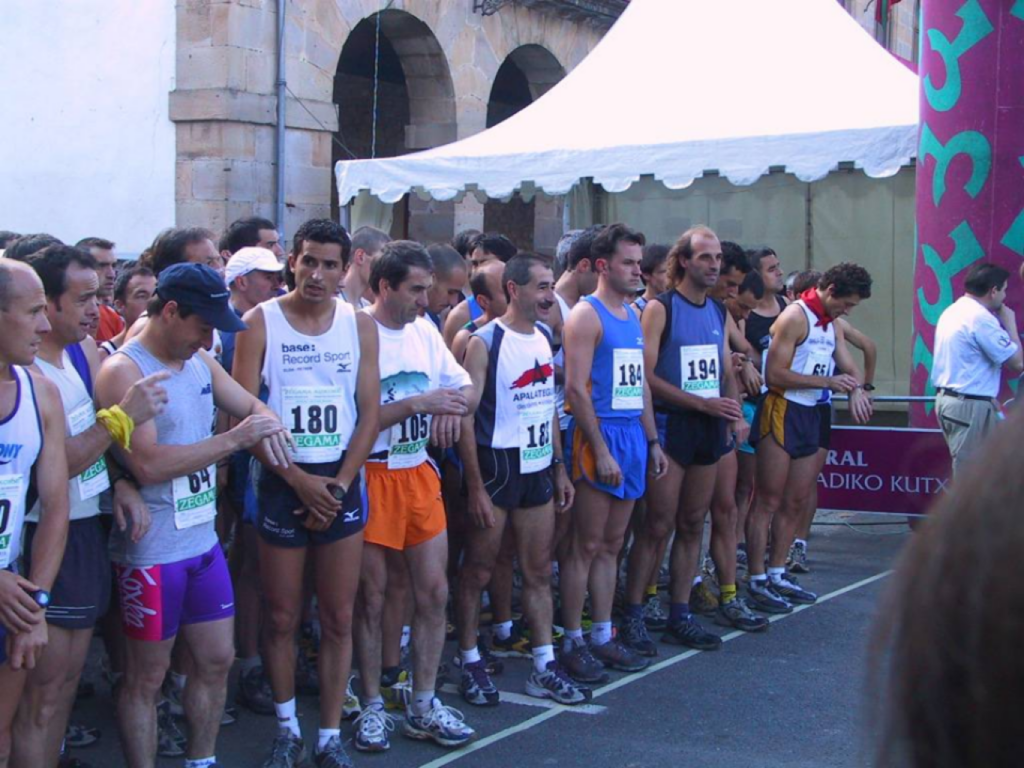
The story of Zegama‑Aizkorri began in the early 2000s, when the idea emerged to create an event capable of attracting visitors and breathing new life into a village facing rural depopulation. That vision became reality in 2002, with the first edition of the race. What started as a local initiative quickly gathered momentum, driven by the enthusiasm of local institutions and volunteers, and by the wild beauty of the surrounding mountains, eventually growing into one of the most prestigious trail running races in the world.
But the roots of Zegama‑Aizkorri were planted long before the first athletes ever toed the start line. Everything began with the initiative of a group of local inhabitants (Asociación de Amigos del Aizkorri) and a simple yet deeply communal idea: organising a picnic in the mountains to bring people together. “For the first edition, we sent the invitation to everyone from Zegama living outside the village,” the organisers recall. Following the success of the second gathering, the challenge was raised by the regional mountain federation (Federación Guipuzcoana de Montaña): if the picnic worked, why not organise a mountain marathon? The response was immediate. “I already have the route”, said Alberto Aierbe, one of the event’s driving forces from day one.
The original route, hand‑drawn on paper on a 1:25,000 scale map, traced a 35‑kilometre course through the mountains surrounding Zegama. With only minor adjustments over time, it evolved into the 42‑kilometre course runners face today, one that has remained virtually unchanged ever since.
FROM LOCAL ROOTS TO GLOBAL ICON
Few can pinpoint the exact moment when Zegama‑Aizkorri became a global reference. The answer likely lies in a village fully committed to its race, and in a collective way of doing things with care, authenticity and passion. “In the second edition, the race became part of the Spanish Mountain Running Cup,” recalls Aierbe. “By the third edition, it had joined the World Cup, which began to attract the world’s top athletes.” In 2007, a 19‑year‑old Kilian Jornet made his Zegama debut… and won.
Jornet is the most decorated athlete in the race’s history, with eleven victories, nearly half of all editions held. In 2026, he will once again line up at the Zegama‑Aizkorri start line as part of the opening round of the Golden Trail World Series season. “A special race in a special year. This year marks 25 years of Zegama‑Aizkorri. A quarter century of one of the most iconic mountain races in the world: 42 kilometres, 2,736 metres of vertical gain, technical terrain, and an atmosphere unlike anywhere else on the planet. For the 25th edition, it felt impossible not to come back,” Jornet wrote on social media when announcing his return.
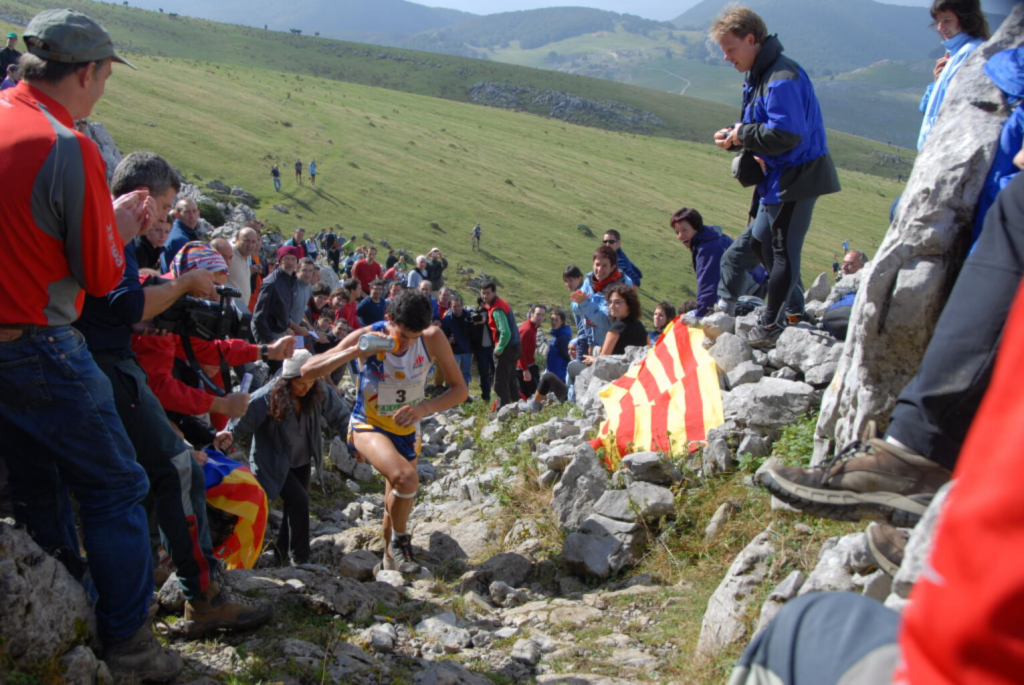
Zegama‑Aizkorri joined the Golden Trail World Series in 2018, the year the circuit was created, and has remained a cornerstone of the calendar ever since, except in 2020 and 2021, when the race was held virtually with very limited entries due to the pandemic. “Being part of the GTWS is very important. It is the highest‑level trail running circuit in the world; you only have to look at the quality and prestige of the races on the calendar, and the athletes they attract,” explains Aierbe.
According to the race’s founder, the most significant evolution over the years has been in media exposure. In 2011, Zegama‑Aizkorri was broadcast live for the first time, with fixed cameras at the start, finish and several key points along the course. Since 2022, the race has been fully broadcast thanks to camera runners and drones. “That has given us incredible visibility,” he adds. Today, audiences around the world can follow the competition through the GTWS official channels, WBD platforms (HBO Max, Eurosport, discovery+ and TNT Sports), and an extensive global broadcast network.
To mark its 25thanniversary, part of Zegama‑Aizkorri’s history will be showcased in a temporary exhibition at the Museo de Madera de Zegama. The exhibition will feature volunteer shirts, athlete equipment, commemorative objects, trophies and race bibs, offering a tangible journey through the evolution of one of trail running’s most iconic events.
MORE THAN A RACE
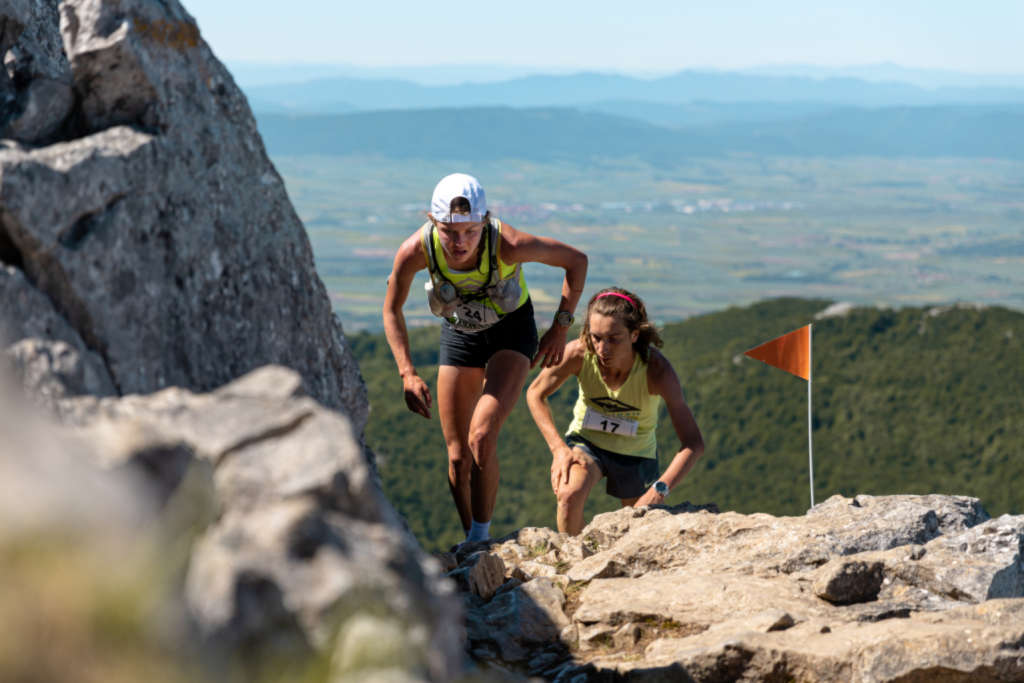
Each year, just 500 runners out of more than 11,000 applicants secure one of the coveted bibs that grant access to the start line. Of those, only four athletes have completed every edition since 2002. One of them is Mikel Legarreta, who took part in the very first race with little experience in the discipline. “The race has evolved enormously. In the first edition, we were mountain lovers who decided to run. Today, the level of the participants is incredibly high,” Legarreta reflects. Zegama’s legacy extends even further: “Now, when you go into the mountains, you see more people running than walking. When the race was created, very few people ran on the trails.”

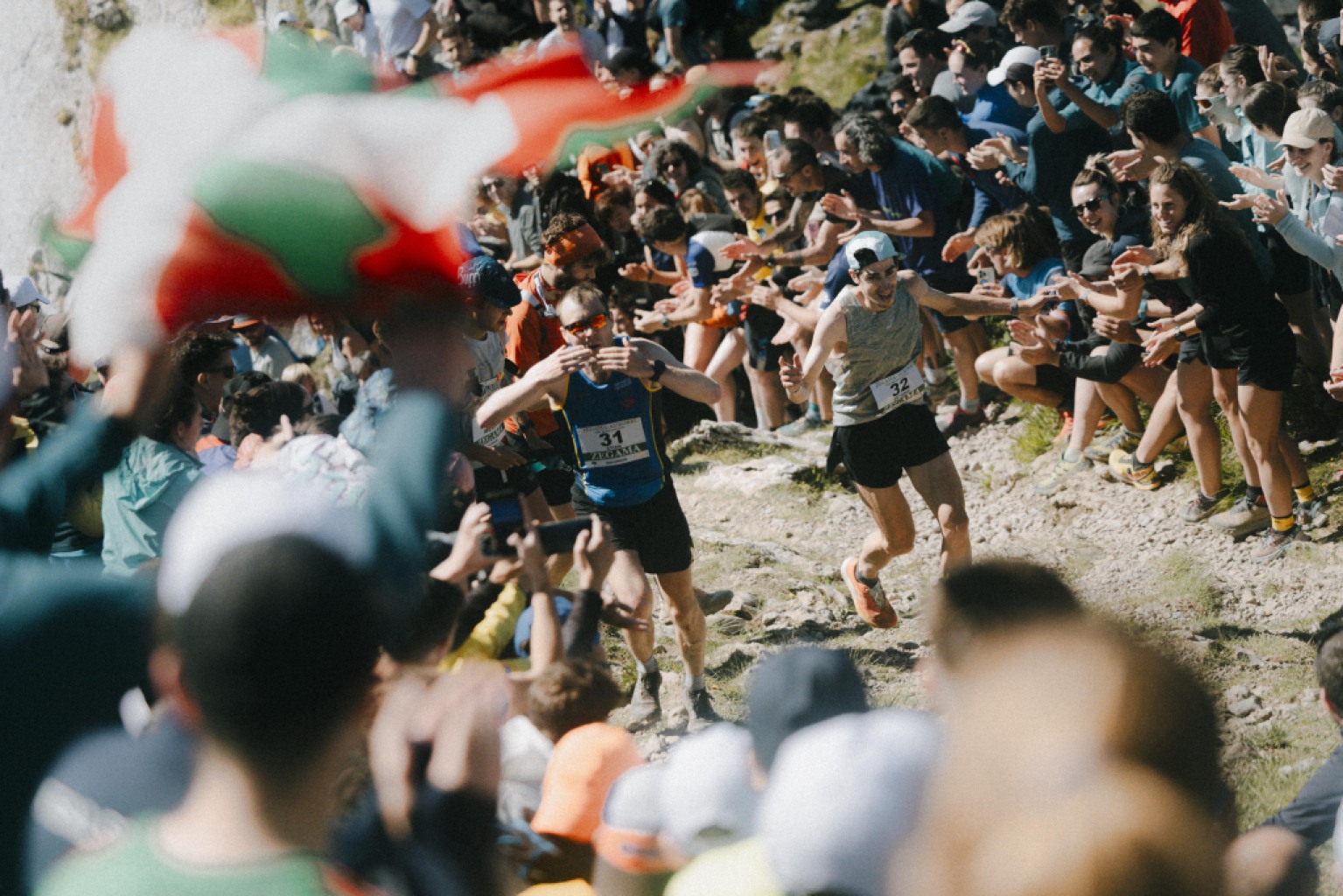
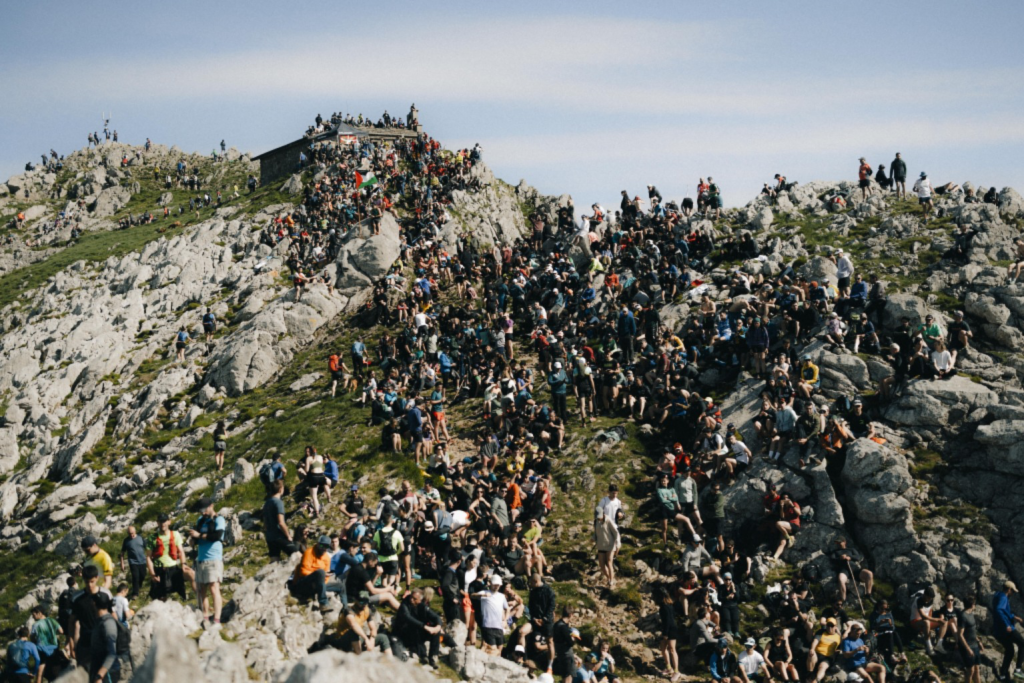
But if there is one element that truly defines Zegama‑Aizkorri, it is its extraordinary atmosphere. Each edition transforms the village and its surrounding mountains into a living celebration. Thousands of spectators line the entire course, cheering runners on from start to finish. “It’s incredible how the whole town lives race day,” says Legarreta. “Every year, you think you’ve reached the maximum number of spectators, but somehow, there are always more.”
A JOURNEY THROUGH THE BASQUE MOUNTAINS
The course runs through the Aratz massif and the Aizkorri range, summiting four of the highest peaks in the Basque Country (Spain). From the village of Zegama, runners head towards the Otzaurte Pass before plunging into spectacular mountain terrain that cuts through beech forests, rocky ridgelines and high‑altitude pastures. Its most iconic section is the legendary Sancti Spiritu climb: a brutal 180‑metre ascent with an average gradient of 30%, where thousands of spectators pack the slopes, creating one of the most electrifying scenes in trail running.
With 42 kilometres and 2,736 metres of elevation gain, Zegama‑Aizkorri stands as the longest race on the GTWS calendar. In 2025, Sara Alonso (Asics) and Elhousine Elazzaoui (NNormal) claimed victory, each securing their first win in a race dreamed of by trail runners around the world. Alongside international prestige, winners are awarded two deeply rooted Basque symbols: a txapela (the traditional Basque beret worn as a mark of honour and victory) and a ceremonial axe engraved with the names of all past champions.

The current course records were set in 2022 by Kilian Jornet (3:36:40) and Nienke Brinkman (4:16:43).
On May 17, Zegama‑Aizkorri will celebrate its 25th anniversary, paying tribute to the mountains and to the spirit of trail running itself. Thousands of fans will once again line the slopes of Aizkorri to roar the runners on, showcasing the strength, passion and unique energy of the Basque crowd. A landmark edition that will also inaugurate the new GTWS format. Because there are many mountain races, but only one Zegama. And, as those who know it best say: “Zegama is Zegama.”