
World Series
24/10/2026
Kolbeinsdóttir Shines in Muju as Florea Retains her Golden Trail World Series Crown
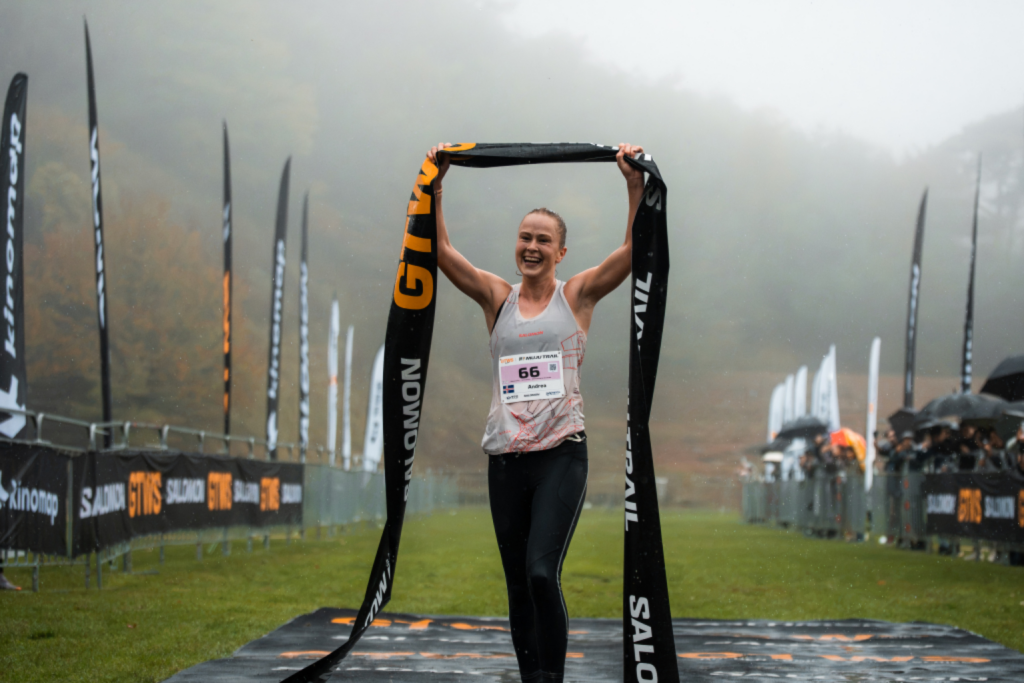
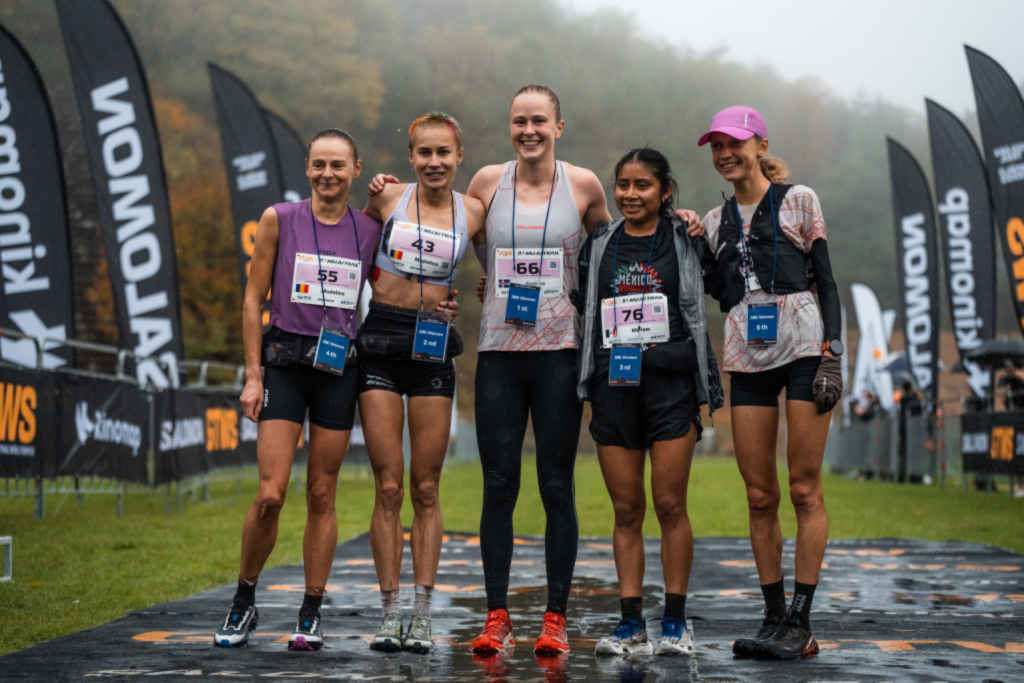
Muju Trail, the 2026 Golden Trail World Series (GTWS) Grand Finale in South Korea, has crowned a new star. Andrea Kolbeinsdóttir (Salomon) claimed her first victory on the circuit with an outstanding display of talent, strength and adaptability on one of the most technical and demanding courses in the history of the competition: 28.6 kilometres with 2,313 metres of elevation gain, made even tougher by the rain.
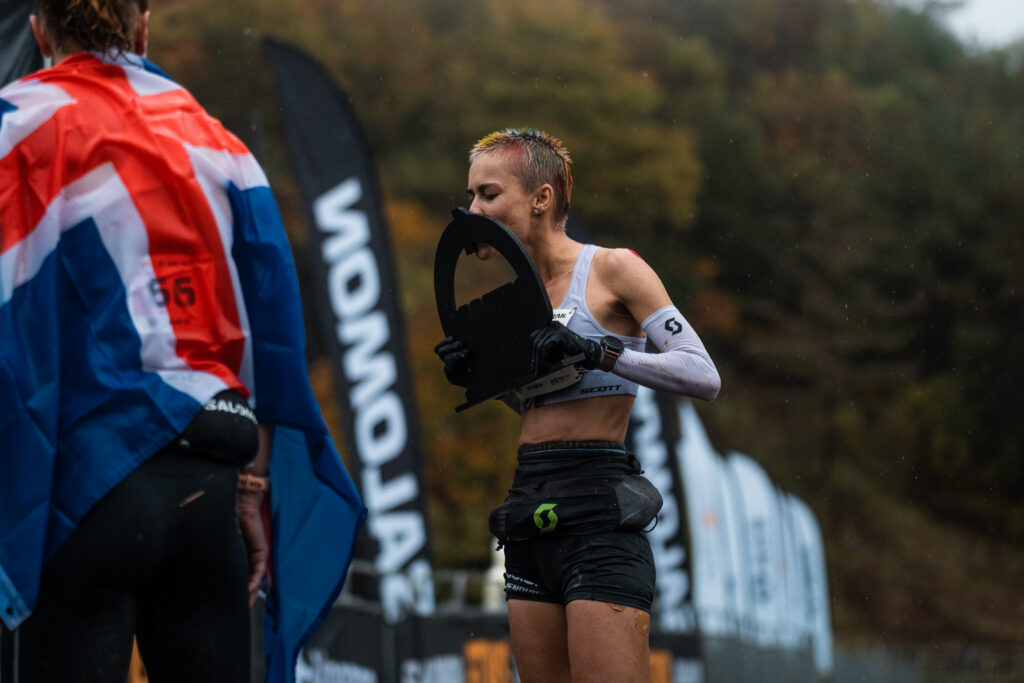
Just a few minutes later, Madalina Florea (Scott) crossed the finish line in second place with another reason to celebrate: the result saw her retain her GTWS overall title.
Mexico’s Miriam Morales (México Imparable) completed the podium in Muju with an impressive third place. The Grand Finale also left the other two podium positions in the overall standings unchanged, with Caroline Kimutai (Salomon) ending the season in second place and Ruth Gitonga (Run2Gether On Trail) taking third.
KOLBEINSDÓTTIR: A STAR IS BORN
The opening kilometres created the first gaps on the only section of the course where the athletes were able to settle into a consistent running rhythm, along a wide track with little variation in gradient. From there, they faced a demanding six-kilometre climb towards Seolcheonbong.
Caroline Kimutai (Salomon) took the initiative and opened a gap at the front, with Madalina Florea chasing 24 seconds behind as they reached the transition section around Hyangjeokbong, the highest point of the course at more than 1,600 metres above sea level. Behind them, the race remained wide open, with Madalina Amariei (Kailas Fuga), Ruth Gitonga (Run2Gether On Trail), Andrea Kolbeinsdóttir (Salomon) and Hanna Groeber (Nike ACG) all within two minutes of the lead.
The race changed dramatically on the first descent towards Baengnyeonsa Temple: 2.5 kilometres at an average gradient of -28%, featuring steps, wet rocks and a carpet of fallen leaves that concealed the terrain beneath and made an already technical descent even more challenging.
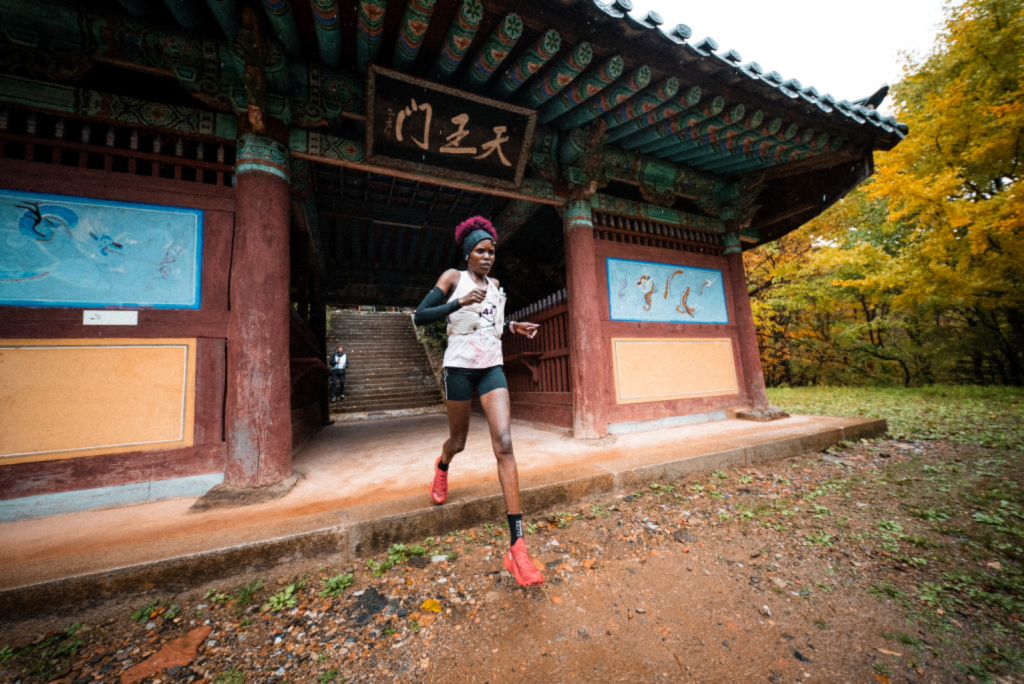
Florea caught Kimutai halfway down and moved into the lead, while her compatriot Amariei clawed back more than a minute to reach the bottom of the descent in second place. Further back, Italy’s Beatrice Bianchi (Salomon) flew through the section to win the segment in 13:54, an impressive 1:51 faster than the second-fastest athlete, Miriam Morales(México Imparable).
But it was Kolbeinsdóttir who used the descent to launch the move that would ultimately change the course of the race. The Icelander caught Kimutai before emerging as Florea’s main challenger on the next climb towards Hyangjeokbong. Across technical forest trails and uneven rocks, she gradually closed the gap before overtaking the Romanian near the summit. The pair then began the second descent towards the temple together.
The nature of the course turned the battle for victory into a constant exchange of positions. Time gained on the punishing climbs could quickly disappear on the technical descents, where other athletes were able to make up ground, creating a far more unpredictable race than on more conventional courses.
Behind the leaders, Amariei reclaimed third place from Kimutai on the descent. Kimutai then suffered a fall and was also passed by Mexico’s Morales, ending her hopes of claiming the overall title. Groeber’s challenge also came to an end as she withdrew with muscular problems, having returned to competition following the wrist fracture she suffered at the Great Wall of China.
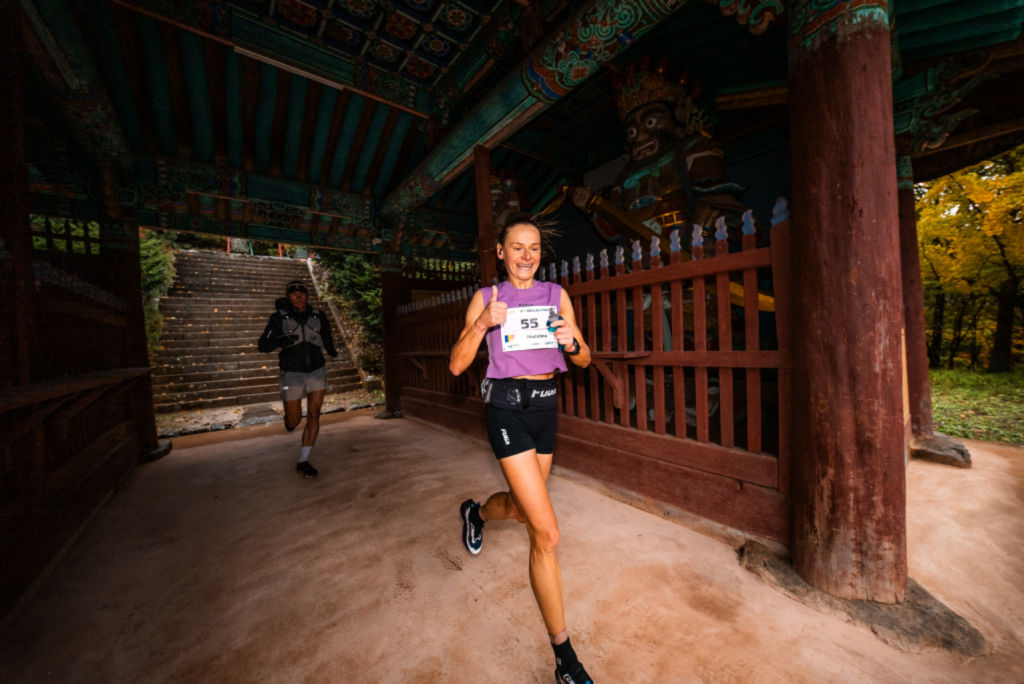
Kolbeinsdóttir did not escape the descent unscathed either. The Icelander pushed the limits and suffered a fall, but still reached kilometre 17 with a 35-second advantage over Florea. The sprint segment started there, covering 1.1 kilometres at an average gradient of -7.7% and featuring a spectacular flight of steps alongside the river. Kolbeinsdóttir came out on top once again, clocking 3:49, just one second faster than Florea.
With the rest of the contenders now more than five minutes behind, victory had become a two-woman battle. However, Kolbeinsdóttir’s advantage soon disappeared and Florea moved back into the lead during the transition towards the final major climb to Chilbong.
The pair traded the lead through the opening stages of what would prove to be the decisive ascent: 2.2 kilometres at an average gradient of 25.2%, with sections exceeding 40%, huge steps and slippery rocks that at times forced the athletes to use their arms to help propel themselves upwards. The difficulty also took its toll on Morales, who fell after having already moved into third place.
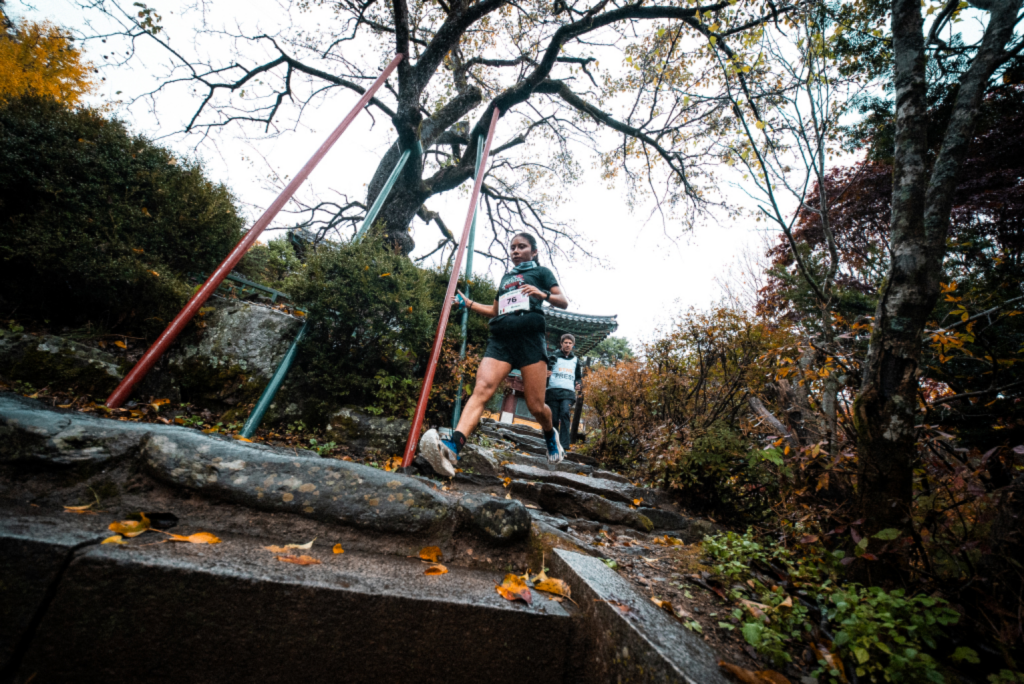
It was here that Kolbeinsdóttir made the decisive move. The Icelander finally dropped Florea, who was also struggling to keep her balance on the slippery terrain, and reached the top with an advantage of almost three minutes. It gave her a healthy cushion heading into the final descent. However, the fastest time on the climbing segment belonged to Theres Leboeuf (Compressport / Lowa), who completed it in just over 32 minutes.
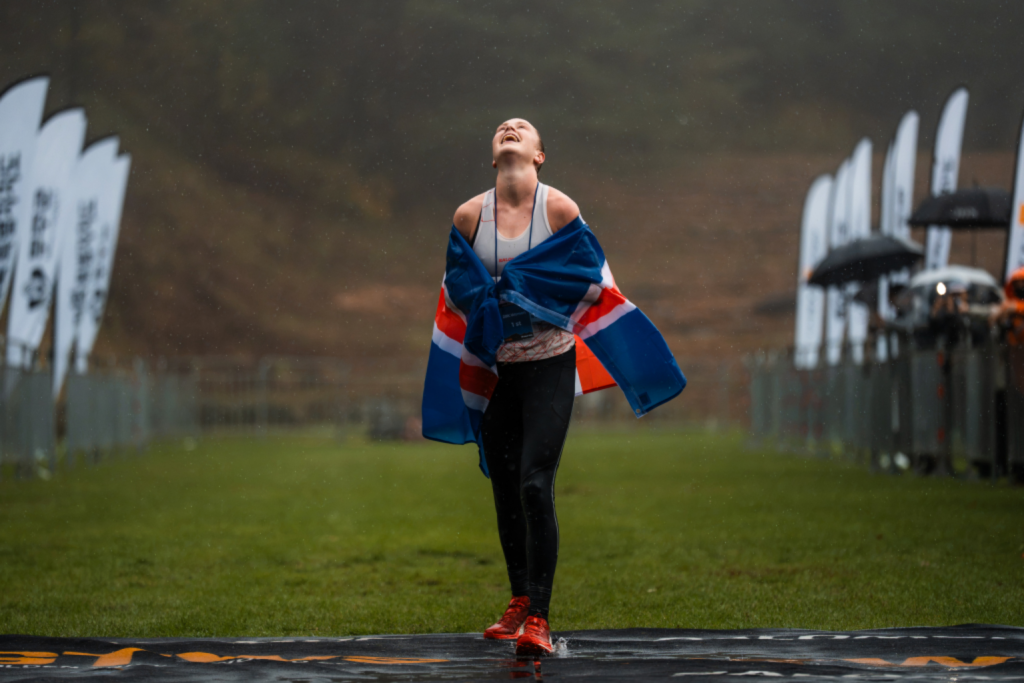
Rather than simply protecting her advantage, Kolbeinsdóttir continued to extend it on the final descent and reached the finish line nearly six minutes clear of Florea. The Icelander secured her first Golden Trail World Series victory in 3:19:56. Behind her, an elated Florea crossed the line and celebrated by rolling in the puddles, with second place delivering an even bigger prize: her second consecutive Golden Trail World Series overall crown.
The battle for the final podium position was considerably tighter. Morales and Amariei reached the final ramp through the ski resort separated by very little, but the Mexican held on to third place by just 24 seconds. Morales capped an outstanding performance in Muju by finishing 9:15 behind the winner.
A GOLDEN TICKET TO THE TOP
Kolbeinsdóttir’s journey to victory in South Korea began many months earlier and thousands of kilometres away, in Australia. “It was quite funny. I was in Melbourne and my coach told me I could race the Golden Trail National Championships (GTNC) and that I had a chance of winning. I won it and earned a Golden Ticket to come here to South Korea,” she explained.
The Golden Tickets provide a direct route to the GTWS Grand Finale, designed to uncover and give opportunities to the best national talent and emerging stars of trail running.
Muju Trail brought together 19 athletes who qualified through eight races across three continents. In addition, the top three men and women at the Grand Finale who arrived in Muju from outside the top 30 earn a Golden Ticket to compete in the GTWS in 2027.
After securing her ticket to Muju, Kolbeinsdóttir had already offered a glimpse of her potential at Ledro Sky Trentino in Italy. She finished fifth, proving she could compete with some of the best athletes in the world, while also showcasing her strength on technical terrain by setting the fastest time on the downhill segment.
So, while her victory in Muju may have come as a surprise to many, Kolbeinsdóttir herself had other ideas. “I have to admit, this morning I said to myself: ‘I can win this.’ I felt so positive and really believed in myself. It’s a course that suits me very well. I’m good on technical terrain.”
The victory firmly establishes the Icelander among the world’s best over this distance and could even lead her to rethink what comes next. Having previously considered moving up to longer distances, her performance in Muju has opened up another possibility: “Maybe I’ll dedicate next year to the Golden Trail World Series.”
FLOREA CAPS A NEAR-PERFECT SEASON WITH A SECOND GTWS TITLE
After a season defined by remarkable consistency, Madalina Florea has been crowned Golden Trail World Series champion for the second time. The Romanian has enjoyed an almost flawless 2026 campaign, with victories at Québec Mega Trail in Canada, Salomon Pitz Alpine Glacier Trail in Austria and Sierre-Zinal in Switzerland. In the only two races she did not win, Ledro Sky Trentino and the Muju Trail Grand Final, she finished second.
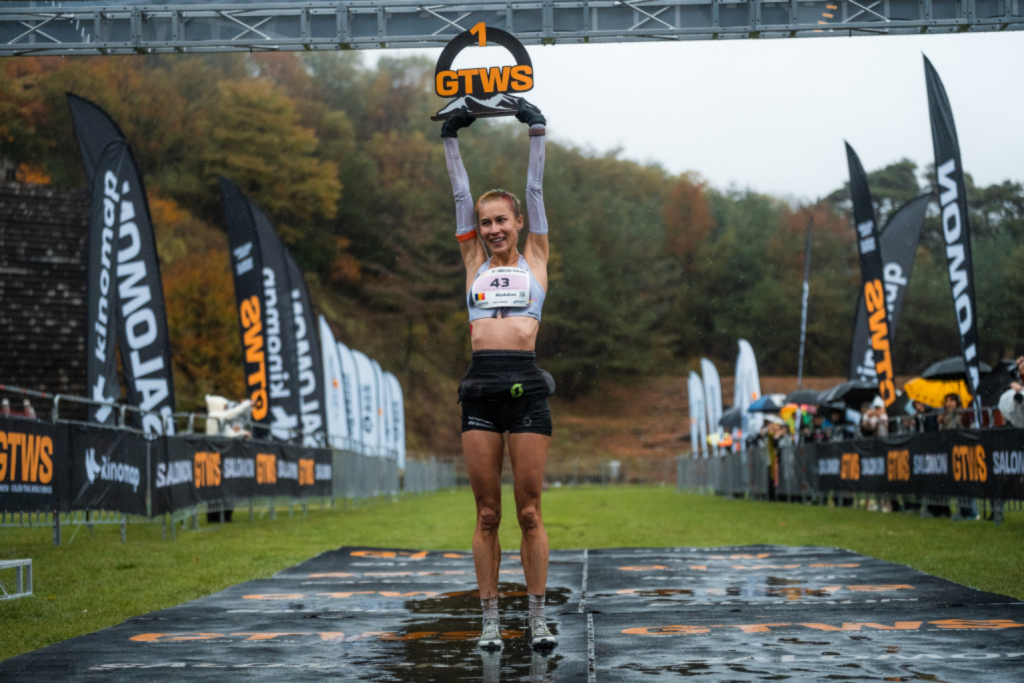
The champion ends the season with 1,164 points, ahead of Caroline Kimutai in second with 1,016 and Ruth Gitonga in third with 982. “Every race I’ve competed in this year has helped me win this trophy,” she said at the finish. The sheer difficulty of Muju made the achievement even more special: “It’s the hardest race I’ve ever done. I couldn’t feel my body,” she admitted after securing her second crown.
The Golden Trail World Series season will reach its conclusion on Sunday with the men’s Grand Final, starting at 13:00 local time (05:00 CEST). Philemon Kiriago (Run2Gether On Trail) heads into the race as the overall leader, followed by teammate Patrick Kipngeno and Morocco’s Elhousine Elazzaoui (Nnormal), winner of the overall title in 2024 and 2025. With just 46 points separating the top three, the battle for the title remains wide open. Click here to find out where to watch all the action live and on demand.